Design — 2024
Data Viz: Enterprise Design System for AI
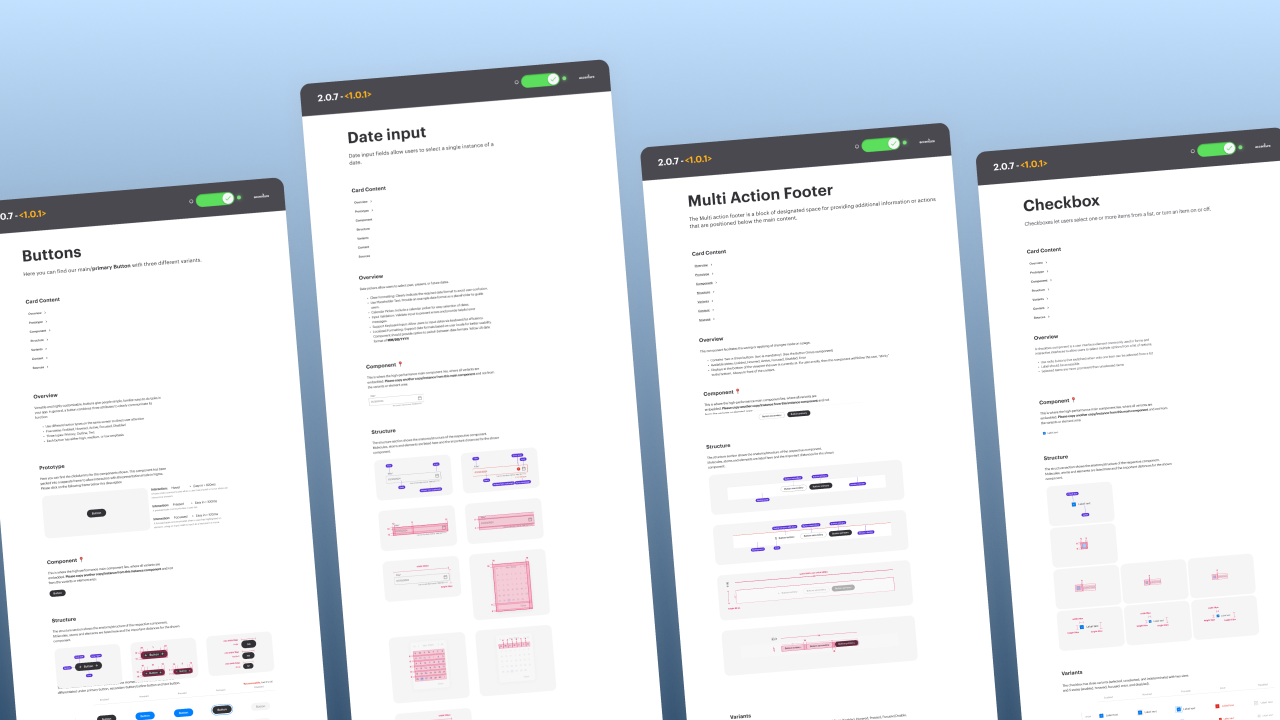
Overview
The Change Management Platform is a global enterprise client's suite of digital transformation tools for C-Suite executives — already mid-development across three product tracks when I joined, with no design system holding it together. Working closely with our Experience Design lead and a cross-functional team, I helped build a scalable system centered on a component lifecycle framework, cutting rework and accelerating design-to-dev handoff across the platform.
The Challenge
When I joined the Change Management Platform — a global enterprise client's suite of digital transformation tools for C-Suite executives — the project was already in motion with multiple product tracks moving rapidly. Despite ambitious goals, it lacked a critical foundation:
- No centralized design system
- 100+ UI components scattered across files
- Inconsistent naming and zero documentation
- Siloed teams with limited visibility
The result? Fragmented user experiences, constant component recreation, unclear handoff, and mounting technical debt.
The Solution
Rather than just standardizing components, I developed a comprehensive system built around a component lifecycle model that brought order to chaos:
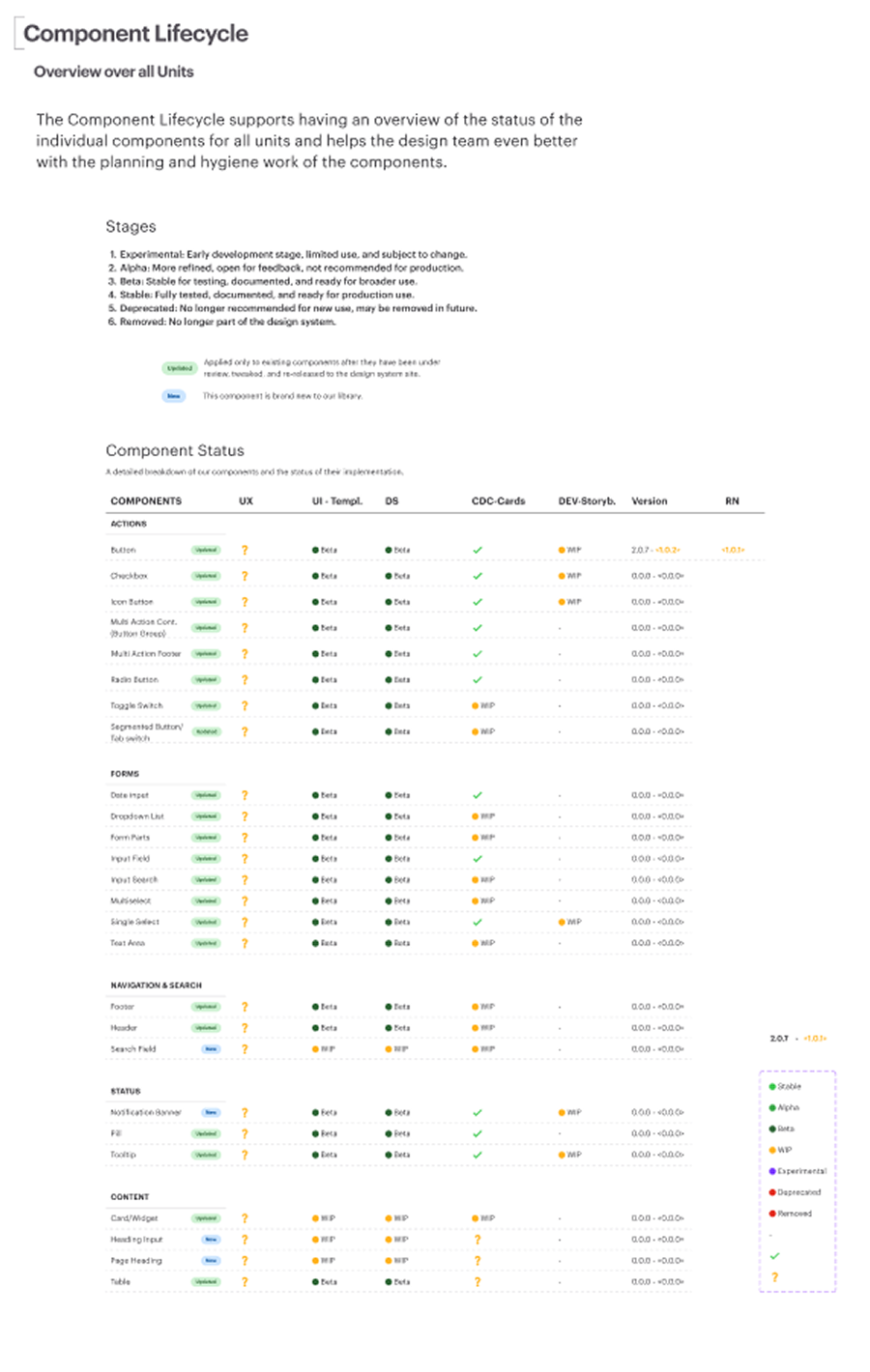
Component Lifecycle Framework
Based on research of established systems (USWDS, GitHub Primer), I implemented a status framework tracking components through their entire lifecycle:
Experimental → Beta → Stable → Deprecated → Removed
Enhanced with team-specific status columns that answered:
- Is the UX design complete?
- Has the visual design been finalized?
- Is the documentation ready?
- What's the development status?
Each component's status also tracked accessibility readiness — ensuring WCAG and the client's brand-accessibility standards were verified before a component moved from Beta to Stable.
Documentation That Connects Teams
For each component, I created standardized documentation cards containing usage guidelines, interaction states, variants, and code references — becoming the bridge between design and development.
The Process
This was a collaborative effort from the start — I partnered closely with our Experience Design lead on the lifecycle framework's structure and led the system design and Figma implementation, alongside a global team of developers who validated the code-reference documentation in Storybook.
I approached this systematically while balancing my primary UX responsibilities:
- Research & Assessment: Cataloged existing components and researched industry best practices
- System Design: Created atomic hierarchy and designed the lifecycle tracking model
- Implementation: Built a Figma component library with documentation in Confluence
- Adoption: Facilitated workshops and established regular system updates
Workshops covered:
- How to navigate and update the component lifecycle tracker
- When and how to flag a component as deprecated
- How documentation cards map between Figma and Confluence for dev handoff
The key innovation was creating visibility across global teams through:
- End-of-sprint design system updates in Microsoft Teams
- Component roadmaps aligned to sprint cycles
- Clear ownership and status tracking
Impact
Faster Development: Clear component status cut sprint-planning back-and-forth, moving roughly 30 components from experimental to stable within 1 month.
Reduced Handoff Friction: Standardized documentation cards eliminated most ad hoc clarification threads between design and dev across 3 product teams.
Enhanced Product Cohesion: Consistent components across all three product tracks, used by an estimated 120 designers and developers.
Improved Cross-Team Trust: A shared component vocabulary that outlasted the initial rollout — the system was still active 4 months after launch.
The Insight
Design systems aren't just about components — they're about communication.
This project revealed that at enterprise scale, a design system's success hinges more on transparency and shared language than perfectly designed components. Creating structure amid complexity isn't just good design — it's essential business strategy.
Most importantly, the system continued to be used months later, proving its long-term value in supporting the client's broader digital transformation tools.